“In today’s fast-paced world, creating a sanctuary within your home is more important than ever. Whether you’re looking to unwind after a long day or to improve your mental well-being, transforming your living space into a sensory haven can offer much-needed solace. This approach, rooted in multisensory design, utilizes elements that stimulate
the senses to enhance relaxation, reduce anxiety, and promote mindfulness.” Those were the introductory words of an interview with High Point University Assistant Professor of Interior Design Lisa Williams.
Dr. Jane Nichols, Interior Design Department Chair at High Point University, introduced us to Williams noting that she had recently concluded a research study on sensory design.
Some will think that Sensory Design is only or primarily meant to be for individuals with special sensitivities such as those with autism spectrum disorders or Misophonia, a chronic condition that causes people to have intense emotional reactions to specific
sound.
Sensory Design, however, can benefit everyone. “From soft lighting to tactile surfaces and soothing sounds, a sensory sanctuary provides an escape from daily stressors while improving your home environment,” Willams says.
The concept of a sensory haven originates from the development of Multisensory Environments (MSEs), which have been widely used in settings like hospitals, therapy rooms, and even universities to help individuals manage stress and anxiety. These spaces are designed to provide a balance of sensory stimulation and tranquility through carefully chosen elements that engage sight, sound, touch, smell, and even proprioception (the sense of spatial orientation).


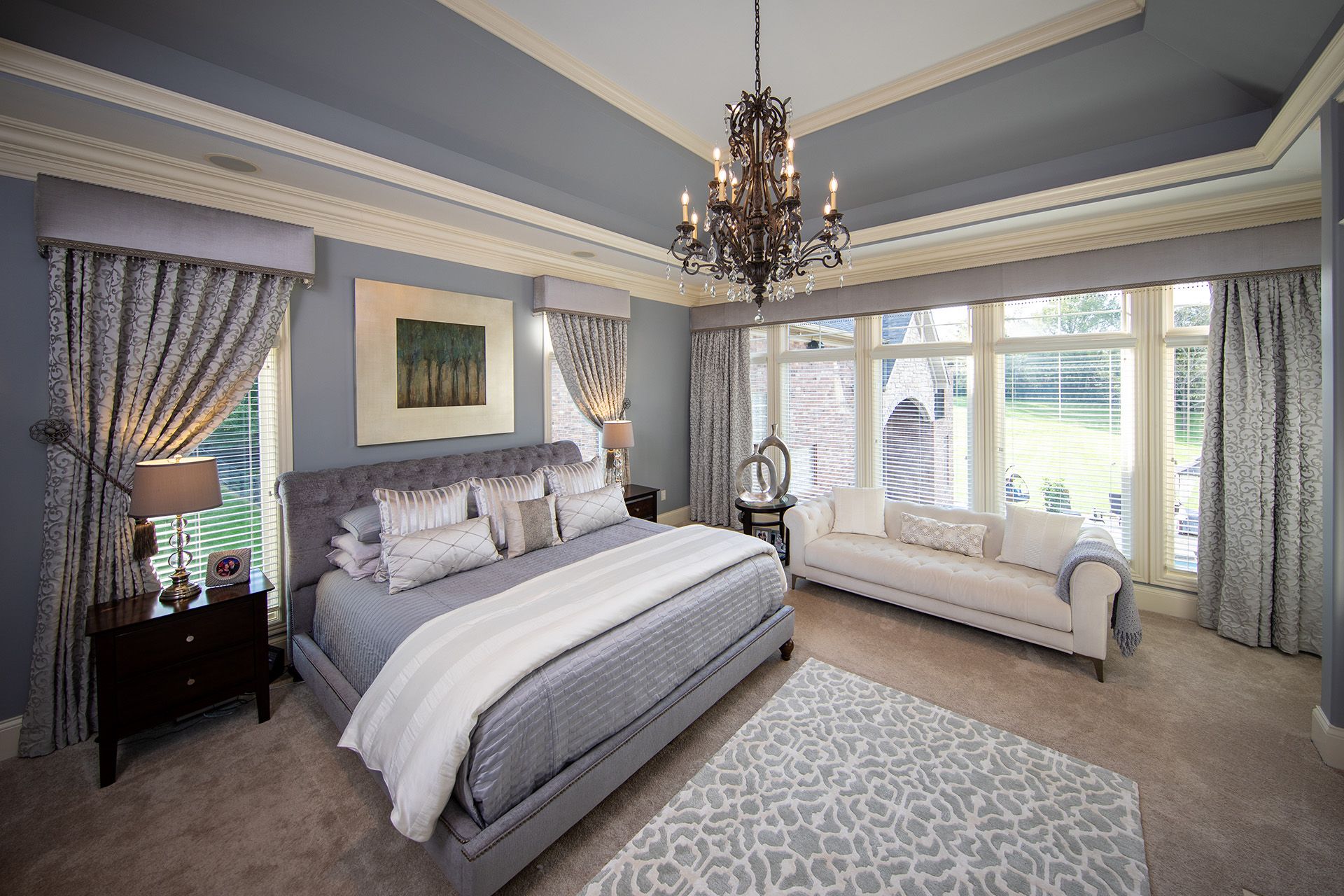
Bedrooms are popular for including such elements. Styled in transitional elegance, the bedroom above showcases faux silk drapes, rattan accent and carved wood furniture. An area rug anchors the space, while an organic-shaped bench and a sizable mirror optimize the layout. Thoughtfully applied textures throughout create a tranquil and Zen atmosphere, perfect for unwinding after a long day.
Lighting is the Foundation
Movie-goers and TV watchers have known for years how lighting can establish a mood or dictate the emotional response of the audience. But there is science behind it as well. “The neuroscience is clear,” reported a Psychology Today article, “some colors and intensities of light create better atmospheres for particular situations while alternatives are found in settings where different sorts of thoughts and behaviors are most likely.”


The variety of lighting above includes candlelight for added sensory pleasure. The metallic wallcovering and metallic accents gain emphasis from the lighting. Graceful hand-painted herons appear to be flying off the wall across the ceiling bring nature’s
tranquility indoors.
Don’t forget how dimmable lighting can change the mood in a room. “More dynamic lighting, such as LED strips or fiber-optic lights, can enhance the sensory experience,” adds Willams. “These options allow you to adjust not only brightness but also colors and patterns, creating an interactive element that appeals to your sense of sight. Imagine a gentle glow of green or blue lights paired with natural sounds to create a forest-like atmosphere.”
Fostering Calmness Through Interaction of the Senses
Sound, touch, and aromas all can be incorporated to make the senses more active.

Whether sounds from nature, like a waterfall or soft rain, or various types of music, sounds can easily change a mood. Willams, who has n Interior Architecture MFA from UNC-Greensboro, explained how sensory room users there had the option to select sounds that aligned with their mood. “At home, consider installing a sound machine or using a smart speaker, or a tabletop fountain,” she says.